Buying · Everyone · 3 min read
Before you call: what to have ready so you get an accurate quote fast
The turbo tag, the engine serial number, the codes as read. Six things that turn a vague call into a firm quote.
Why having details ready speeds up your quote
Getting an accurate estimate for a diesel turbocharger repair or exchange starts before you ever pick up the phone. The industry relies on precise identification because trucks with the same engine family often have different turbo variants depending on the model year and emissions package. A good shop needs these specific details to match the correct part number without guessing, which prevents costly errors and delays.
Capture a clear photo of the data tag
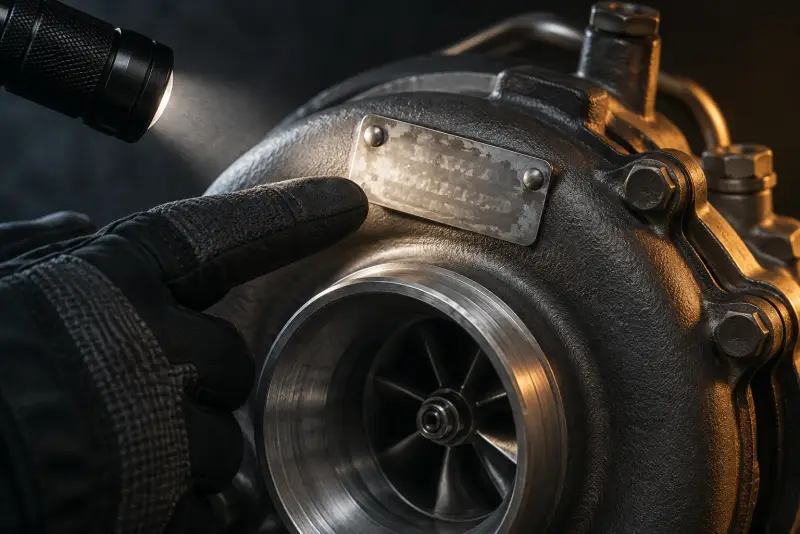
The most critical piece of information is a high-quality image of the manufacturer's data tag. This metal plate usually sits on the compressor housing or the center section of the turbocharger. Before taking the picture, wipe away any grease, dirt, or oil that might obscure the numbers and letters. Ensure the entire tag is in focus and readable from end to end.
The tag carries the part number and serial that identify the exact configuration of wheels, housings and actuator. Without it, a shop is guessing which of several variants you have. A blurry image often leads to back-and-forth calls that slow down the process significantly.
Provide engine identification details
You will also need the engine serial number or vehicle identification number. On Cummins 6.7 engines, this is typically found on a separate plate or stamped directly on the block, distinct from the main VIN. For Ford Power Stroke and GM Duramax trucks, the standard VIN is usually sufficient when paired with the model year.
These numbers matter because engine families like the 6.7 Cummins, 6.7 Power Stroke, and L5P Duramax have undergone many changes over the years. A turbo that fits one model year may not fit the next because of changes to oil lines, flanges, sensors or the actuator. Providing this data ensures you receive a unit that physically bolts up correctly.
Describe exactly how the failure happened
Tell the shop whether the issue is sudden or gradual. Did you hear a loud whining noise or a grinding sound immediately? Or did you notice a slow loss of power over several weeks? Be specific about symptoms like excessive smoke, oil leaking into the intake piping, or the truck failing to boost properly.
Knowing the failure mode helps technicians determine if the damage is isolated to the rotating assembly or if there is contamination in the oil system. If oil was found in the intake, it suggests a seal failure that could have damaged the compressor wheel. It also tells the shop what to look for at teardown, and what to warn you about at install.
Share usage habits and timing needs
Let them know how you use your equipment. Are you an owner-operator hauling heavy loads, a farmer running a combine, or a fleet manager keeping a construction truck on the road? Mention the approximate hours or miles if available.
State clearly when you need the part back. If your truck is down for work, a shop can prioritize your order to minimize downtime.
Clarify your rebuild or exchange preference
Decide if you want to send in your own core for rebuilding or if you prefer an exchange unit. Confirm whether the actuator comes with the unit, and whether it has to come back with your core.
Finally, ask about shipping instructions for your old turbo. A good shop will provide a return label or specific packaging requirements to ensure the core arrives safely and qualifies for a credit.
Quick preparation checklist
- Clear photo of the turbo data tag (wipe first)
- Engine serial number or VIN with model year
- Exact fault codes and if they are intermittent
- Description of symptoms (noise, smoke, oil in intake)
- Primary use case (towing, farming, fleet, etc.)
- Desired turnaround time
- Preference for exchange vs. rebuilding your own unit
- Whether the actuator is included, and comes back with the core
- Shipping method for the core
Text a photo of your turbo tag or call to get started.