Diagnosis · Pickups · Heavy trucks · 3 min read
VGT turbo symptoms and codes: P0299, P003A, P2263 and what to check first
Underboost, limp mode, surging. What the common codes point to, and the checks worth doing before anyone condemns the turbo.
What a VGT turbo actually does
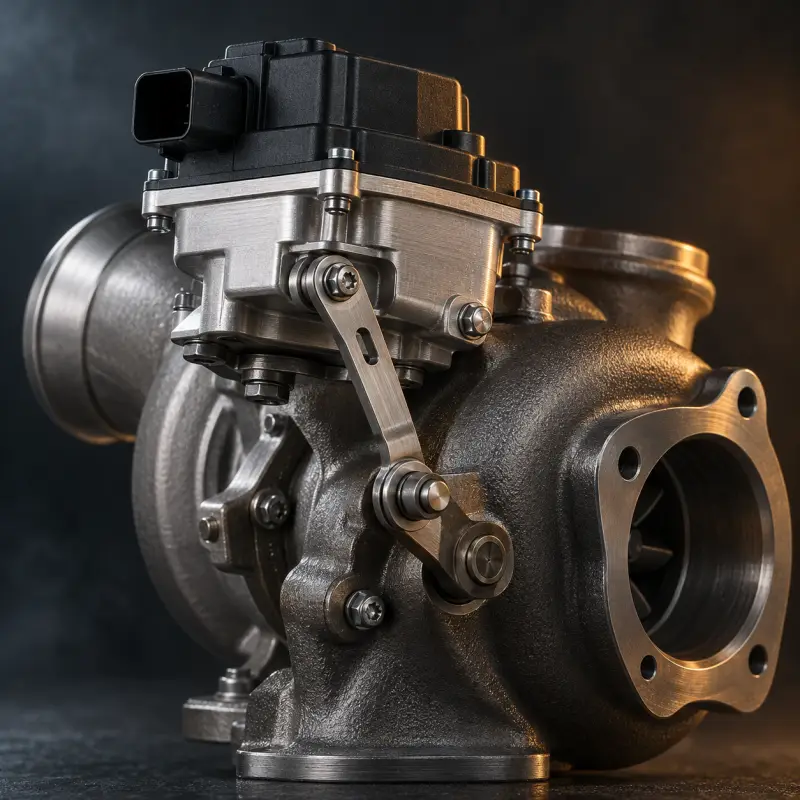
A Variable Geometry Turbocharger (VGT) works differently than older fixed-geometry units. Inside the turbine housing, small metal vanes pivot to change the angle at which exhaust gas hits the turbine wheel; Holset units on Cummins engines slide a nozzle ring instead, with the same effect. Closed vanes speed up the exhaust for quick response at low engine speed; open vanes let it through at high speed to prevent overboost. On many trucks the same vanes work as the exhaust brake.
An electronic actuator moves these vanes back and forth based on commands from the engine computer. The system constantly adjusts the vane position to maintain the exact boost pressure the engine needs. When this delicate balance is disrupted, the engine computer detects a mismatch between the commanded position and the actual result.
Common symptoms of a failing VGT
Owners often notice performance issues before seeing any warning lights on the dashboard. You might feel a noticeable lack of power or underboost during acceleration, especially when towing heavy loads. Conversely, some engines experience overboost conditions where pressure spikes higher than intended.
Other signs include surging engine speed while idling or cruising at a steady pace. A high-pitched whine or whistle that changes with engine load can indicate air escaping from the housing or internal damage. You may also see black smoke under load, which usually means too little air for the fuel being injected: a leak, or vanes stuck in the wrong position.
You might also find blue smoke or oil collecting in the intercooler hose. That can be a turbo seal, but it is just as often a restricted drain line or crankcase pressure pushing oil past a healthy seal, so it needs checking rather than assuming. Many drivers eventually experience limp mode, where the truck restricts power to protect the engine, accompanied by a persistent check engine light.
What specific codes tell you
Diagnostic trouble codes help narrow down the source of the problem. The P0299 code typically points to underboost conditions. This can be caused by boost leaks in the hoses, vanes that are stuck due to carbon buildup, a faulty actuator, or a sensor reading incorrectly.
P003A means the boost control position, in practice the VGT actuator, went past its learned limit. This usually means the actuator cannot find its mechanical stops. Common causes include heavy carbon deposits on the vane ring preventing movement, a failed actuator motor, or an actuator that was recently installed but never calibrated to the turbo.
Codes like P2262 and P2263 indicate turbo boost pressure system performance issues. These usually point to a sticking mechanism caused by soot or carbon, though they can sometimes signal restrictions elsewhere in the exhaust system.
What to check before condemning the turbo
Before assuming the turbocharger itself is ruined, a good shop will inspect several other components first. You should start by checking all hoses and clamps connecting the turbo to the intercooler for cracks or loose connections that allow air to escape.
Inspect the charge-air cooler for oil. A film is normal on a high-mileage diesel; pooling oil can mean a seal, a restricted drain line or crankcase pressure. Verify that the exhaust back-pressure sensor and its small tube are not clogged with soot, as this can send false data to the computer.
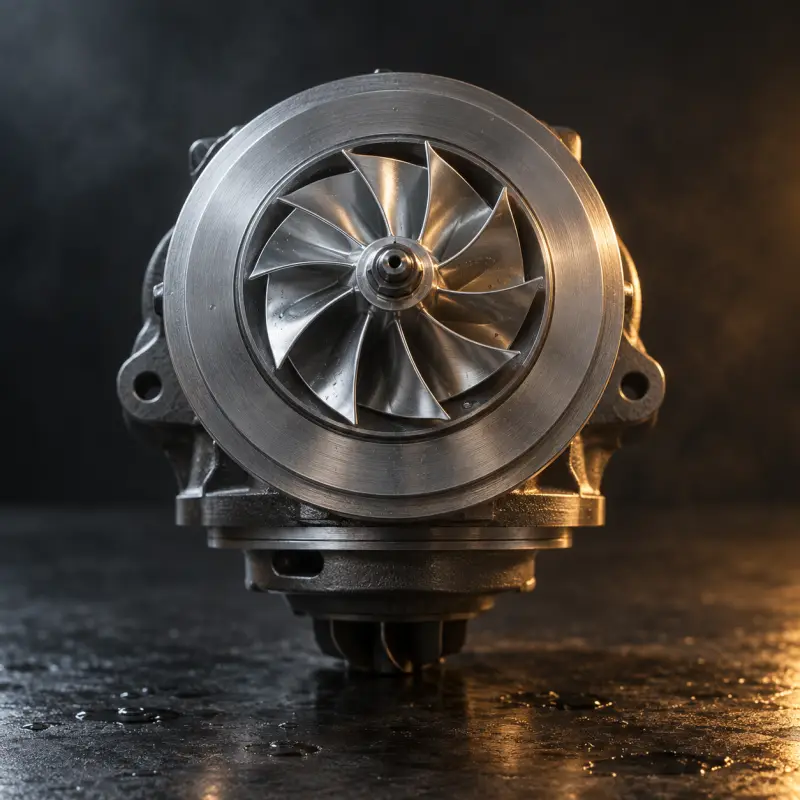
Ensure the electrical connector on the actuator is clean and free of corrosion. If the actuator was recently replaced, confirm whether it was properly recalibrated, as a unit installed without this step will often trigger codes immediately. Finally, with the engine off and the inlet pipe removed, you can check by hand for excessive shaft play or visible damage to the compressor wheel.
When it really is the turbo
If all external checks pass and the codes persist, the issue likely lies within the turbocharger assembly itself. A definitive sign of failure is significant shaft play where the wheel wobbles excessively when moved by hand. You might also see contact marks on the housing where the spinning wheel has rubbed against the metal due to worn bearings.
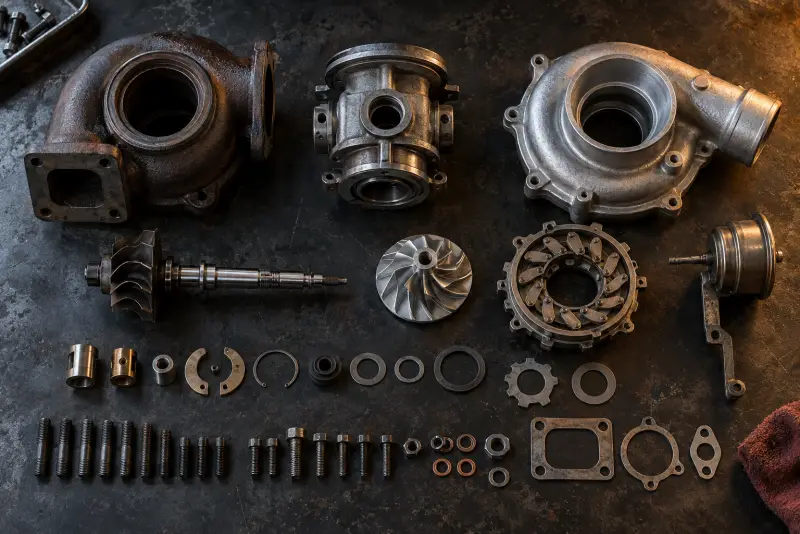
Seized vanes that will not move even with manual force are another clear indicator. If oil is leaking out of both the inlet and outlet sides of the turbo while the engine runs, the internal seals have failed. These conditions call for a full remanufacture, and for finding out what caused them before the next unit goes in.
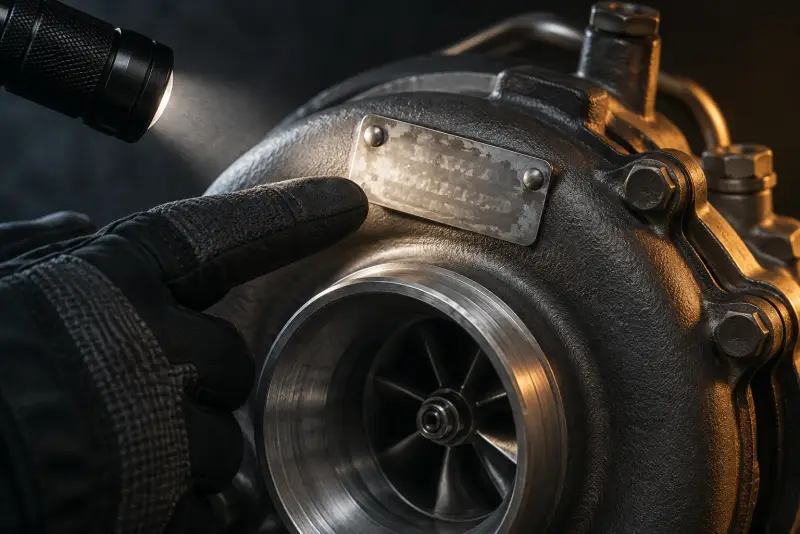
Unsure which one you have? Text a photo of the tag and the codes, or call.