Reference · 4 min read
Turbo glossary: the words on the tag, the quote and the forum
CHRA, VGT, core charge, journal bearing, wastegate. Short definitions in plain English.
On the turbo
Turbocharger — A turbine driven by exhaust gas, spinning a compressor that pushes more air into the engine. More air, more fuel burned cleanly, more power from the same displacement.
Compressor housing and wheel — The cold side. The aluminum wheel draws in filtered air and compresses it; the housing shapes the flow toward the intercooler. Nicked blade tips and rub marks on the housing contour are what a teardown looks for here.
Turbine housing and wheel — The hot side. Exhaust enters the cast-iron housing, spins the turbine wheel and leaves toward the exhaust. Cracks at the divider wall and heat-checked wheels are common findings.
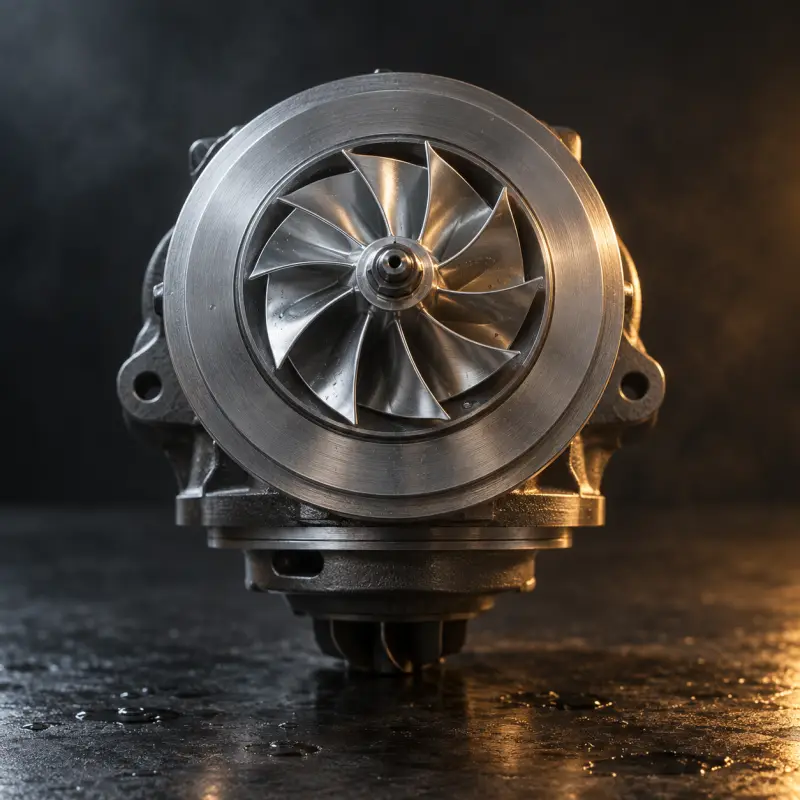
CHRA, center section, cartridge — Center Housing Rotating Assembly: the middle of the turbo, holding the shaft, bearings and seals, with the oil feed on top and the drain underneath. Most wear parts live here.
Journal bearing — A plain bearing the shaft floats on in a film of oil. Simple, tough, and the first thing to die when oil is late, low or dirty.
Thrust bearing — Takes the end-to-end load on the shaft. Worn thrust parts show up as axial shaft play.
Piston-ring seal — The small ring seals at each end of the shaft. They keep oil in the center section and exhaust and boost out. They are not a rubber seal; oil in the intake usually has another cause.
Rotating assembly — Shaft, turbine wheel, compressor wheel and the parts on it, as one balanced unit. Balancing it is what stops a rebuilt turbo from whining and eating bearings.
Wastegate — A valve on a fixed-geometry turbo that bypasses exhaust around the turbine to limit boost. VGT turbos usually have none; the vanes do the job.
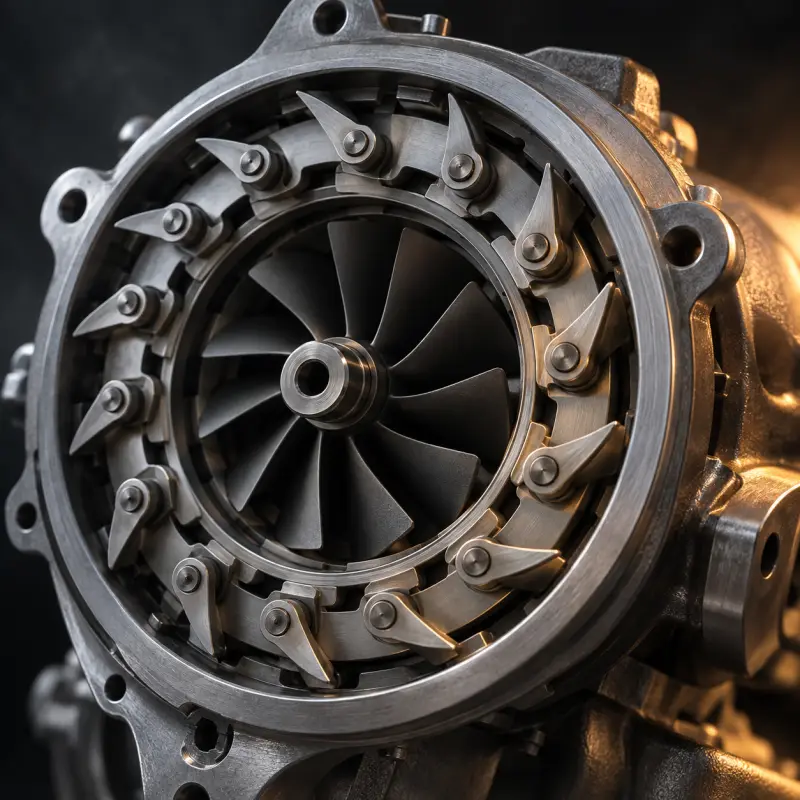
VGT, VNT, variable geometry — A turbo whose turbine inlet vanes change angle (on Holset units, a nozzle ring slides instead). Closed vanes give fast response at low speed; open vanes stop overboost at high speed. Also used as the exhaust brake on many trucks.
Vane ring, nozzle ring, unison ring — The ring of movable vanes around the turbine wheel and the ring that moves them together. Carbon here is the number one cause of "actuator" complaints.
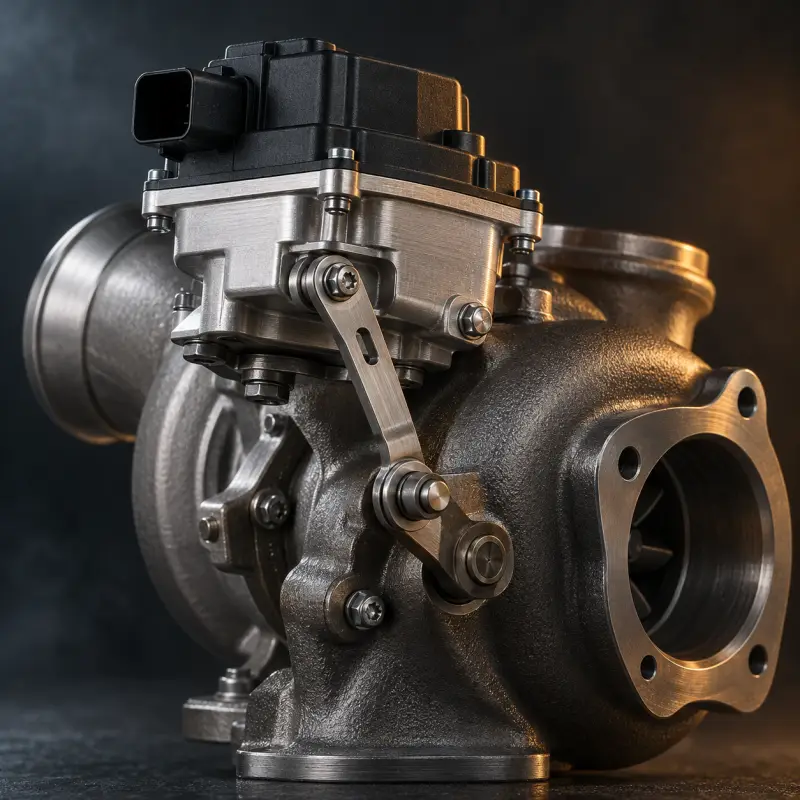
Actuator — The device that moves the vanes. Electronic on late-model diesels, with its own control module; pneumatic or hydraulic on older units.
Calibration, relearn — Teaching the actuator where the vane stops are, with a scan tool or on the bench. Skipping it after a replacement sets range codes even with good parts.
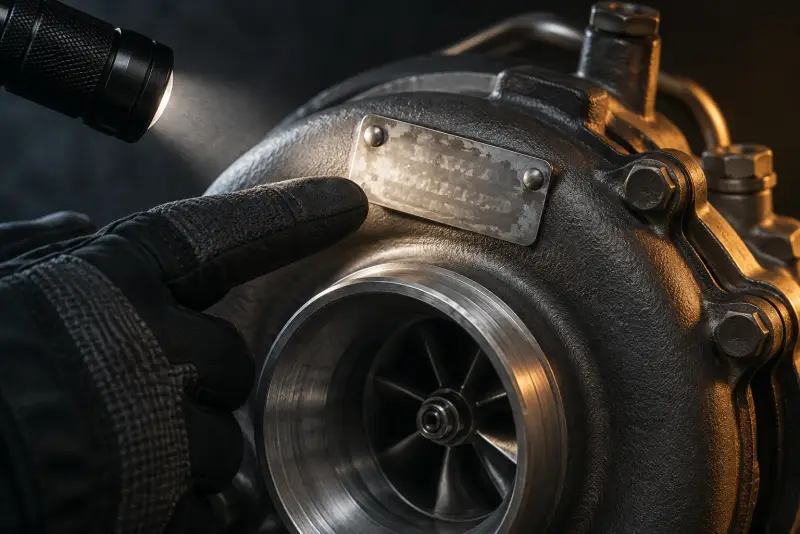
Data tag, part number — The metal tag on the housing or center section carrying the maker's part number and serial. It, not the truck model, decides which turbo you need.
On the quote
Remanufactured, reman — Fully torn down, cleaned, inspected, rebuilt with new wear parts, balanced and tested, to the original specification or better. Not the same as cleaned and resold.
Rebuilt — Loosely used. Should mean the same process as reman applied to your own unit; on some sites it means only the failed part was replaced. Ask what was replaced and whether it was balanced.
Exchange — A remanufactured unit from stock ships first; your old unit comes back as the core. Least downtime.
Core — The used turbo that comes off the engine. It has value because its housings and center section are the starting point for the next reman.
Core charge, core deposit — Money held until the core comes back complete and acceptable. Refunded on inspection; reduced or kept for cracked housings, missing parts or a disassembled unit.
Core credit — The same idea, applied as a discount when you send the core first or bring it with you.
Take-off — A used unit removed from a running engine, sold as is. No teardown, no new parts, no way to know what is inside.
RMA, return authorization — The number a shop issues before you send a unit back under warranty or as a core, so it is matched to your job when it arrives.
On the forum
Boost — Intake pressure above atmospheric, made by the turbo. Measured in psi or bar.
Underboost, overboost — Boost below or above what the ECM commanded. P0299 is the common underboost code; P0234 the common overboost code.
Spool, spool-up, lag — How quickly the turbo comes up to speed and makes boost. Slow spool under load is a classic symptom of sticking vanes or a leak.
Surge — Boost that oscillates or the compressor "barking" when airflow stalls. Points at vanes, a leak or a mismatched unit.
Limp mode, derate — The ECM cutting power to protect the engine after a fault. Common with actuator and boost codes.
Charge-air cooler, intercooler, CAC — The radiator that cools compressed intake air. Oil film in its hoses is often the first sign of a turbo or breather problem.
EBP sensor — Exhaust back-pressure sensor. Its small tube plugs with soot and the resulting readings imitate a turbo fault.
Oil starvation — The turbo running without enough oil: restricted feed line, low pressure, dry start after install. The most common killer of a new turbo.
Coking — Oil baked into carbon inside the center section after hot shutdowns. Restricts oil passages and roughens bearing surfaces.
Shaft play — Movement of the shaft you can feel by hand with the inlet off: a little radial movement is normal on journal bearings; axial (in and out) movement or a wheel touching the housing is not.
ESN — Engine serial number. On Cummins engines it is separate from the truck's VIN and identifies the exact build, including which turbo it left the factory with.
Have a word that is not here? Text a photo of the tag and ask.