Install · Everyone · 3 min read
Why a new turbo fails again, and how to make sure yours does not
The turbo is usually the victim. Oil starvation, contamination, debris and hot shutdowns, and the install checklist that stops a repeat.
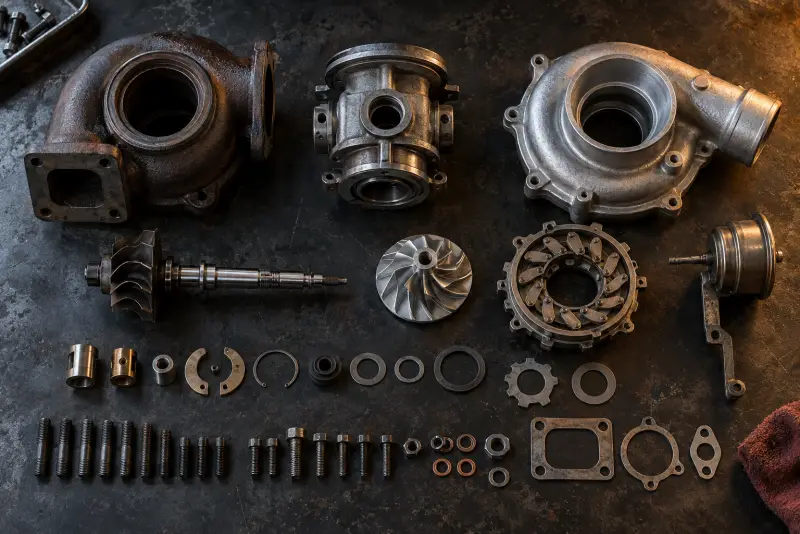
When a diesel loses power or starts whistling, the turbocharger gets blamed. In many cases the turbo is the victim, not the cause. A brand-new unit can fail quickly if the underlying issue that killed the first one was never fixed. Understanding how these failures happen is the best way to stop them from happening twice.
The most common reason a replacement turbo does not last is oil starvation. These components rely on a constant flow of clean, pressurized oil to lubricate and cool their spinning shafts. If the oil feed line is kinked, blocked or coked inside, the turbo spins without enough oil. A clogged oil filter or low engine oil pressure can have the same effect. Another frequent culprit is a restricted drain line. When oil cannot flow back down into the crankcase quickly enough, it builds up inside the turbo housing and forces its way past the seals, leading to oil leaks and eventual failure.
Oil contamination is another major killer. If dirt enters the system, it acts like sandpaper on the delicate bearings and blades. Coolant or fuel mixing with the oil creates sludge that clogs tiny oil passages and destroys lubrication properties. This often happens when an engine has been running poorly for a long time before the turbo was even considered.
Foreign object damage is a silent threat that frequently occurs after a repair. If debris from a previous failure is left inside the intake tract or exhaust manifold, it will be sucked into the new turbo on startup. The spinning blades can shatter instantly upon hitting this material. Similarly, excessive exhaust temperatures and hot shutdowns can cause coking. This is when oil trapped in the hot center housing hardens into carbon that restricts the oil passages and roughens the bearing surfaces.
Boost leaks also contribute to premature failure. When air escapes before it reaches the engine, the computer asks the turbo for more, so it runs hotter and faster than it was meant to. Seals and bearings pay for it.
The install checklist a good shop will ask you to follow
To ensure a new turbo lasts as long as it should, a good shop will require specific steps before and after installation. Following this list prevents the most common causes of repeat failure.
- Change oil and filter: Fresh oil ensures there is no sludge or metal shavings from the old engine circulating through the new turbo. This step provides the cleanest possible lubrication for the first critical minutes of operation.
- Inspect or replace the oil feed line and clean the drain line: A kinked or corroded feed line restricts flow, while a dirty drain line causes oil to back up. Cleaning these passages ensures oil can circulate freely in both directions without restriction.
- Clean the intake tract and intercooler of oil and debris: Flushing out old oil and any loose parts from the previous failure removes potential foreign objects that could destroy the new blades. This step is critical for preventing immediate physical damage.
- Check the air filter and intake for leaks: A tight seal ensures the turbo is not overworking to compensate for lost pressure. Fixing leaks keeps the system balanced and reduces unnecessary stress on the compressor side.
- Prime the turbo with clean oil before first start: Pouring clean engine oil into the oil feed port and turning the shaft by hand fills the bearings before the engine does. This prevents the shaft from spinning dry during the very first seconds of operation, which is when most damage occurs.
- Crank without firing or idle without load for the first minute: Running the engine briefly without putting it under load allows the oil to reach all moving parts and build proper pressure. It ensures the bearings are fully lubricated before heat and load are applied.
- No hard pulls until the oil is up to temperature: Cold oil is thicker and does not flow as well as warm oil. Avoiding heavy loads until the engine warms up prevents high-friction damage during the initial startup phase.
- Find the root cause of the first failure before the second unit goes in: Identifying why the original turbo failed ensures the new one is not placed into a broken system. This final step is the most important for long-term reliability.
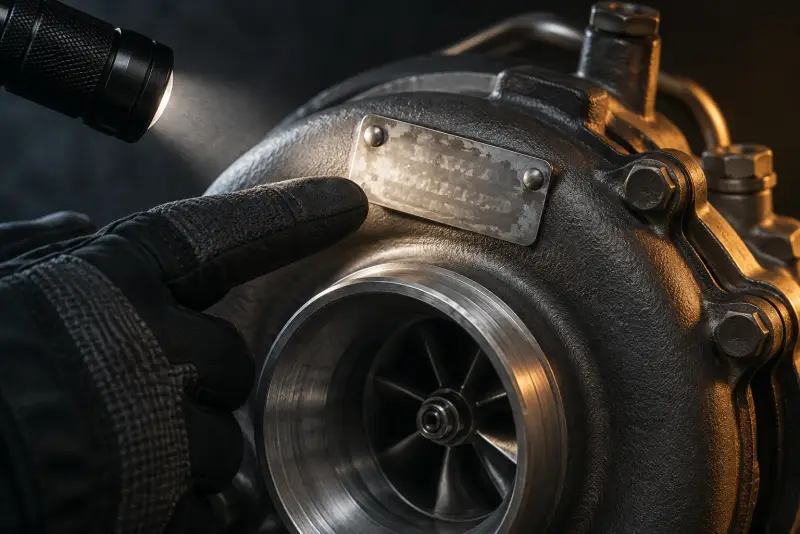
Not sure why the first one died? Text a photo of the tag and of the old unit, or call.